Michael Alexandrovich Romanov
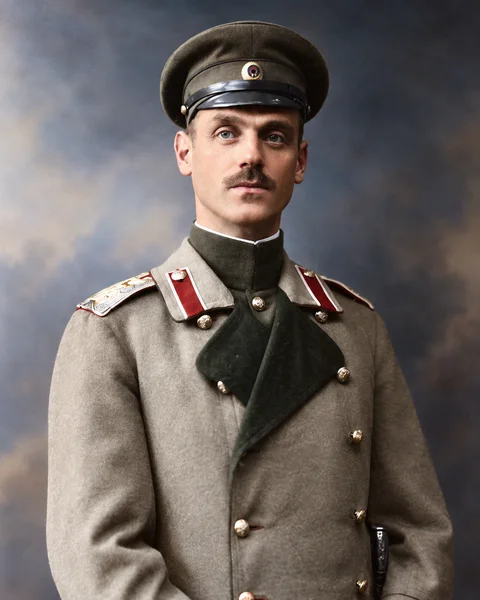
ROMANOV Michael Alexandrovich — a grand duke of the Russian Imperial House, cavalry commander, youngest son of Emperor Alexander III and Maria Feodorovna, and younger brother of Nicholas II. His life is closely associated with the constitutional crisis of the February Revolution of 1917. After Nicholas abdicated in his favour, Michael did not immediately assume supreme power: he made its acceptance conditional on a decision by a future Constituent Assembly.
Raised within the imperial family, Michael received a private education and grew up with his brothers Nicholas and George and sisters Xenia and Olga. George Alexandrovich's death in 1899 made Michael the next heir to Nicholas II until the birth of Tsarevich Alexei in 1904. During that interval official formulas described him as the Heir and Grand Duke; this dynastic position should not automatically be equated with a distinct formal conferment of the title Tsarevich.
Michael pursued active cavalry service rather than a purely ceremonial court career. He served in the Guards and commanded the Chernigov Hussar and Chevalier Guard regiments. His personal life disrupted that career. His relationship with Natalia Sergeevna Wulfert, née Sheremetyevskaya, met strong resistance at court. Their son George was born in 1910, and in 1912 Michael married Natalia abroad without Nicholas II's permission. He was removed from military service and lived outside Russia for a period. His wife and son subsequently became known under the name Brasov. The marriage exposed the tension between the imperial family's dynastic rules and Michael's determination to protect his immediate family.
The outbreak of the First World War enabled Michael to return to Russia and resume military service. He took command of the Caucasian Native Cavalry Division, widely known as the “Wild Division”. Its volunteer mounted troops came from several peoples of the Caucasus; the formation combined imperial military command with distinctive local traditions. The division served on the Southwestern Front against Austro-Hungarian forces. Michael received the Order of Saint George, Fourth Class, and Saint George's Weapon for wartime service. In 1916 he assumed command of the 2nd Cavalry Corps; early in 1917 he became Inspector General of Cavalry.
Nicholas II's abdication on 2 (15) March 1917, with the throne offered to his brother rather than his underage son Alexei, confronted Michael with an unprecedented constitutional question. Following consultations with members of the State Duma and other political figures, Michael signed an act on 3 (16) March stating that he would accept supreme authority only if the people, through a Constituent Assembly, expressed that will. The act should not be reduced to the routine abdication of an already crowned emperor: Michael's legal status during those days and the nature of his decision remain subjects of historical and legal debate. The document nevertheless became central to the end of monarchical government in Russia.
Michael subsequently lived mainly at Gatchina under increasing political surveillance. In 1918 he was arrested and sent to Perm. During the night of 12–13 June, he and his secretary Nikolai Johnson were forcibly taken from the city and murdered by members of a local Bolshevik group near Motovilikha. His burial place has not been conclusively identified. His death was among the earliest killings of members of the Romanov dynasty during the Civil War, while his March 1917 decision remains an important episode in the transition from empire to revolutionary government.